ServicesDock Levelers
Dock Leveler Repair in Lehighton
A leveler that drifts, sticks or won't extend its lip slows every truck at your dock. We find the actual fault, fix what can be fixed, and give you a straight answer when a worn-out unit is costing more to keep than to replace.
Getting your leveler working again
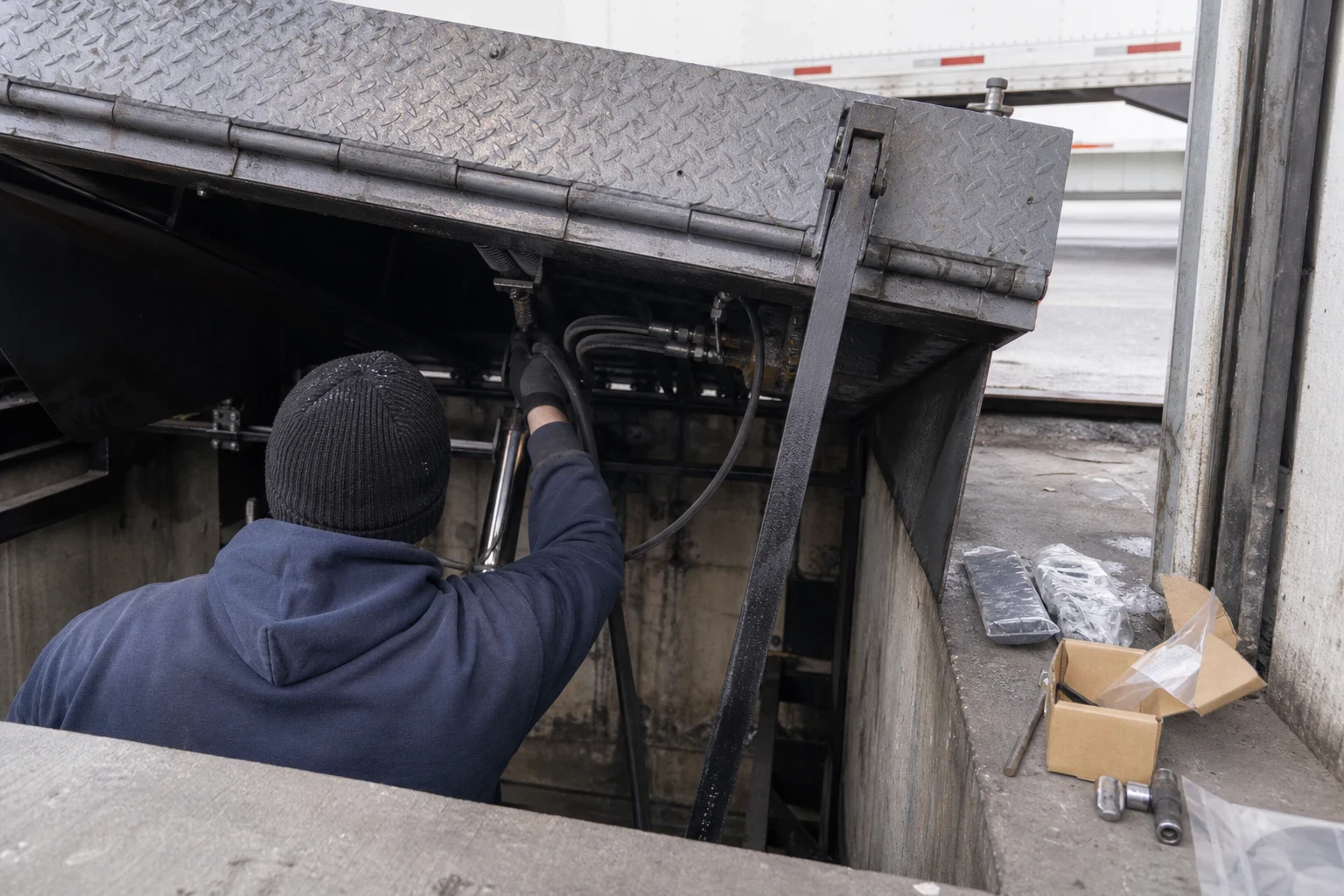
Most dock leveler problems come down to a handful of parts: springs and hold-downs on mechanical units, cylinders, hoses and the power unit on hydraulic ones, and the air bag and blower on air-powered models. Hinge pins, lip plates and welds wear on all of them. When one part fails, the rest of the leveler is often still sound, so a targeted repair usually puts the dock back in service for far less than a new unit.
Repair comes first with us. We only recommend a new leveler when the deck is structurally fatigued, the pit or curb angle is badly damaged, or parts can no longer be found. When that is the case, we show you what we found and explain our reasoning, so you can plan the spend instead of being caught off guard by it.
We work on levelers at warehouses, distribution centers, manufacturing plants and grocery and retail receiving docks across Lehighton, Palmerton, Jim Thorpe and the surrounding area.
What our dock leveler work covers
- Hydraulic system repair
- We trace leaks to the cylinder, hose or fitting, renew seals or swap out failed components, and refill with the correct fluid. The velocity fuse gets tested too, since it is the valve that holds the deck in place if a hydraulic line bursts.
- Mechanical leveler service
- Pull-chain levelers rely on a counterbalance spring and a hold-down mechanism. We adjust tension or fit new springs so the deck rises evenly and stays put under load.
- Lip and hinge repair
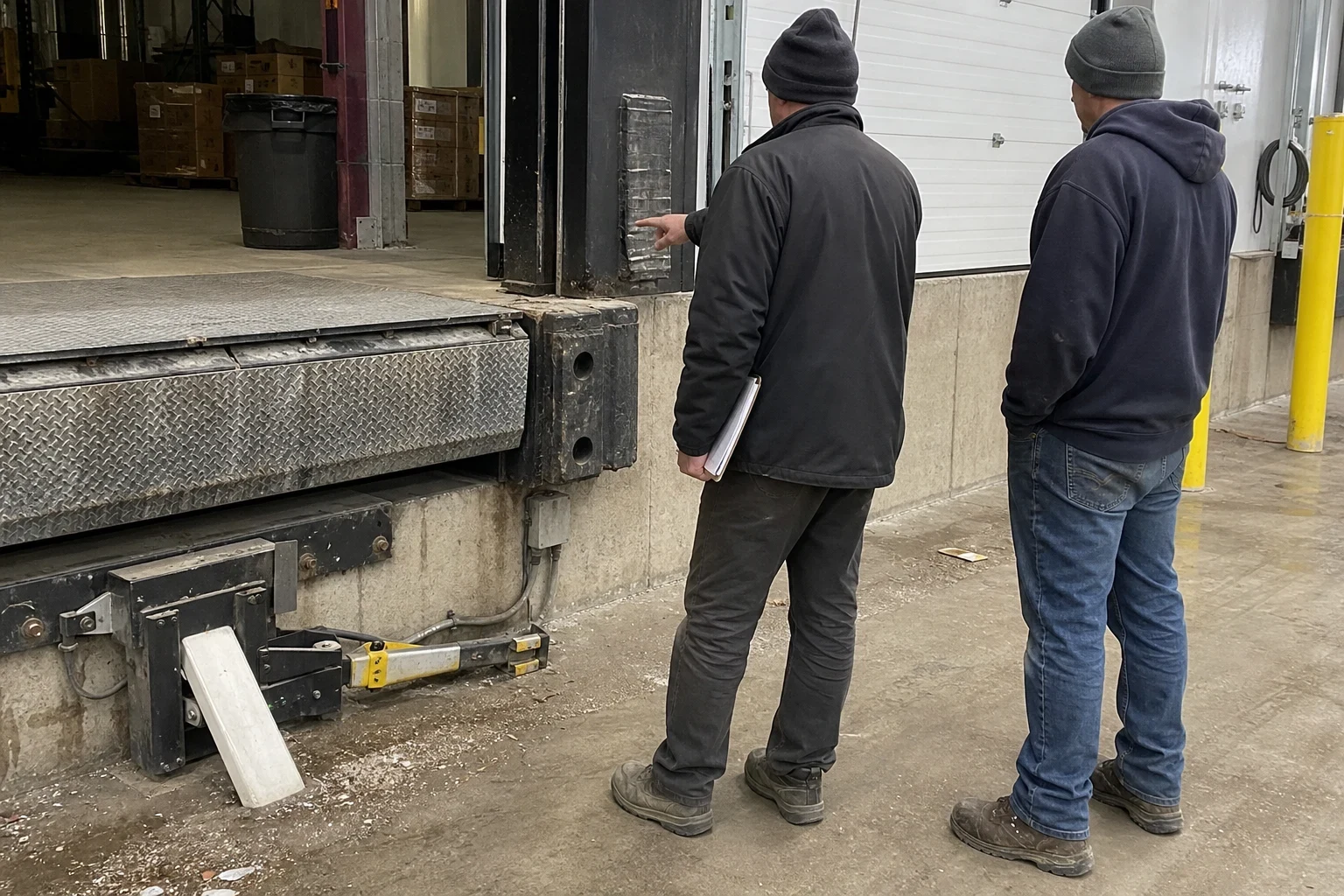
- Worn hinge pins and bent lip plates are the most common reason a lip won't extend fully or sits crooked on the trailer bed. We fit new pins, straighten bent lips or fabricate new ones, and re-weld the hinge tube where needed.
- Structural and weld repair
- Cracked deck welds, broken beams and a damaged front curb angle get repaired or reinforced so the leveler carries forklift traffic safely.
- Weatherseals and toe guards
- Torn side and rear seals let cold air and debris into the building. New seals and toe guards can be handled during the same visit.
Signs your dock leveler needs attention
The deck drifts down
A hydraulic leveler that slowly sinks after you raise it usually has an internal cylinder leak or a failing check valve.
The lip won't extend or stay out
This points to worn hinge pins, a bent lip or a weak lip cylinder. Crews end up kicking the lip down, which is a safety problem in itself.
Oil under the pit
Hydraulic fluid pooling in the pit means a seal or hose is failing. Catching it early keeps a small repair from turning into a new power unit.
Loud bangs or a hard drop
A deck that slams down or jolts under a forklift often has spring, hold-down or velocity fuse trouble.
Visible cracks or a sagging deck
Cracks near welds or a deck that flexes under load need a close look ahead of the next shift running across it.
Slow rise in cold weather
Sluggish hydraulics in a Pennsylvania winter often mean old fluid or a worn pump, and both can usually be sorted out without a new unit.
What affects the cost of leveler repair
Leveler repairs range from a quick seal or hinge pin job to structural welding across the deck. We price each job after seeing the unit, and the estimate spells out every part and the labor ahead of any work.
Leveler type and age
Each leveler design has its own parts list: springs and hold-downs, cylinders and pumps, or air bags and blowers. A discontinued model may mean tracking down compatible parts or having one fabricated.
Extent of damage
A single leaking hose costs far less than a cracked deck beam or a damaged pit curb angle that needs welding.
Number of docks
Handling several levelers in one visit spreads out travel and setup time.
Scheduling
Work outside your normal shipping hours, to avoid downtime, can affect labor cost.
How a leveler repair runs
- 1
Tell us what's happening
Let us know whether the leveler is hydraulic, mechanical or air-powered, what it is doing, and how many doors are down. We pick a time that works around your truck appointments.
- 2
Inspection at the dock
Before anyone reaches under the deck, we lock out power and prop the deck on its maintenance strut. Then we go through the pit, the hydraulics or springs, the hinges, lip and welds, photographing each problem we find.
- 3
Written estimate
Your estimate lists each part and the labor line by line, and it marks which repairs are urgent and which can be planned for later. If a new leveler is the smarter spend, we say so and show you why.
- 4
Repair and test
We complete the repair, cycle the leveler several times, and check the lip and deck under load before the dock goes back in service. Then we leave the pit and work area clean.
Dock leveler questions
Is my leveler worth repairing?
If the deck and pit are structurally sound and parts are available, repair is usually the better value. A new unit makes sense when the deck is fatigued, welds keep cracking, or repair bills are adding up year after year. We give you our honest read after the inspection.
How long will the dock be out of service?
Hinge pins, seals and spring adjustments are usually finished in one trip. Jobs that need structural welding, or a part we have to order, run longer. We give you that timeline at the inspection so you can send trucks to other doors.
Do you work on all leveler brands?
We service mechanical, hydraulic and air-powered levelers from most manufacturers. If a part is discontinued, we look at compatible substitutes or fabrication ahead of suggesting a new unit.
Can a mechanical leveler be converted to hydraulic?
Sometimes, depending on the pit and the existing frame. In many cases a new hydraulic leveler is the cleaner choice, and we can walk through both options. Our Loading Dock Equipment Installation page covers new units.
What keeps a leveler from breaking down like this?
Most failures give warning well ahead of time: a pin starting to wear, a weeping hose, a spring losing tension. Scheduled checks with greasing and adjustment catch those while they are still small fixes. Our Loading Dock Preventative Maintenance service puts your levelers, overhead doors and vehicle restraints on a set schedule.
Get your dock back to normal
Describe what your leveler is doing and we will set up a visit. You will know what is wrong and what it takes to fix before any work begins.