ServicesVehicle Restraints
Vehicle Restraint Repair in Lehighton
When a restraint won't grab the trailer or the lights stop changing, your dock crew is left guessing. We find out why, fix what can be fixed and give you a straight answer if the unit has reached the end of its useful life.
How Restraints Work and When Repair Fits
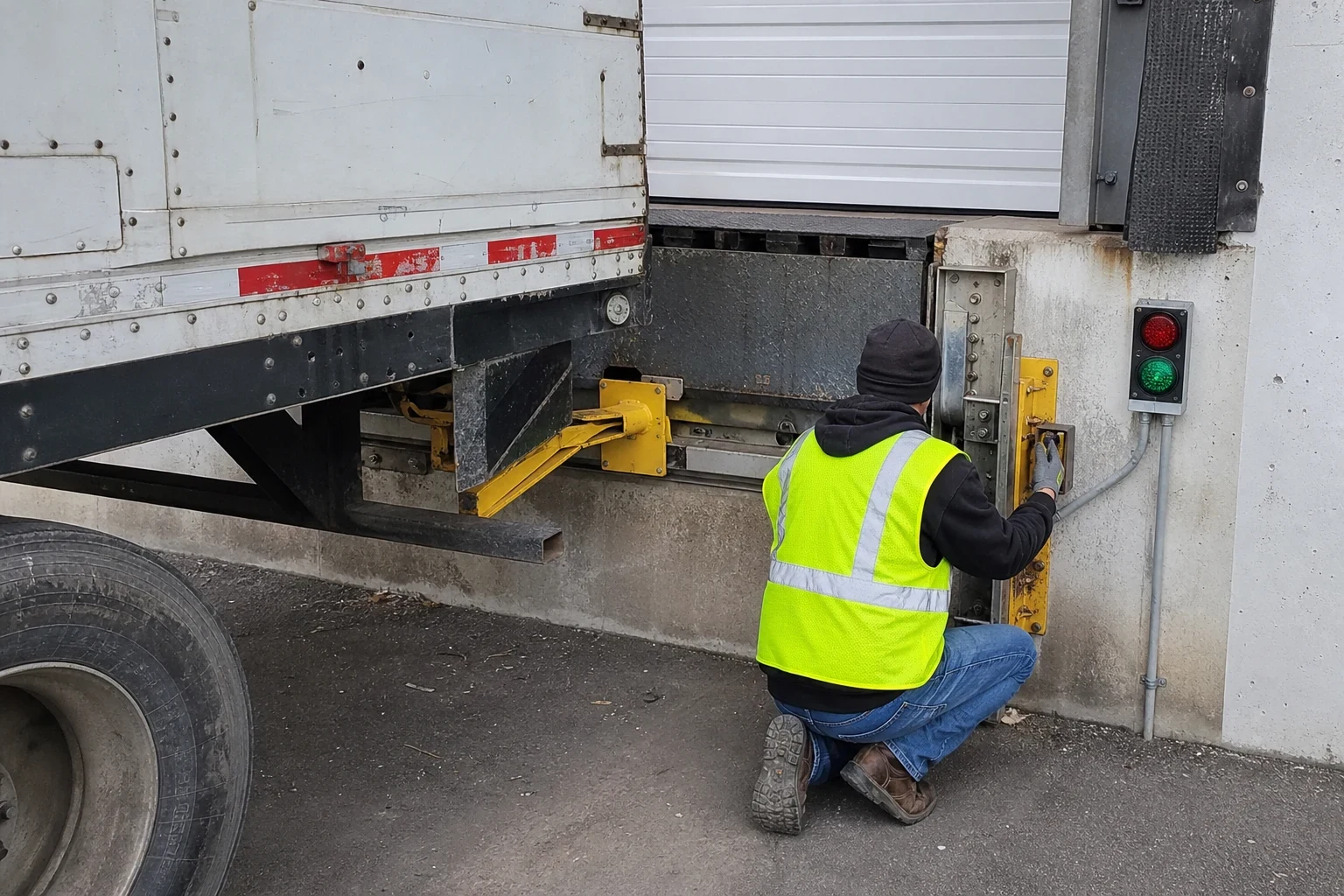
Your restraint's job is simple: keep the trailer pinned to the dock so it can't creep away or get pulled out while a forklift is inside it. It does that by grabbing the rear impact guard with a hook or by locking a tire in place. Inside the door, a light lets your crew know loading is safe. Outside, a matching light tells the driver not to move.
Most restraint problems are smaller than they look. A worn hook spring, a failed limit switch, a burned-out light or a frozen carriage track can take a dock door out of service, and each of those is usually a repair. We start there.
Sometimes repair isn't the right call. If the frame is cracked, the motor and control box are both failing, or parts for an older unit are no longer made, we will show you what we found and explain why a new restraint will cost you less over time. You decide. We serve facilities in Lehighton and nearby towns such as Palmerton, Jim Thorpe and Slatington.
What Our Restraint Service Covers
Hook-style restraints
We repair rotating hooks that catch the trailer's rear impact guard. That includes the hook, the carriage that rides up and down the wall plate, the springs that keep it pressed against the bar and the drive motor or hydraulic unit.
Wheel-based restraints
A trailer with a bent or missing rear guard gives a hook nothing to grab, so these units lock against a tire. We repair the barriers, guide rails and sensors that report the wheel is secured.
Light and signal systems
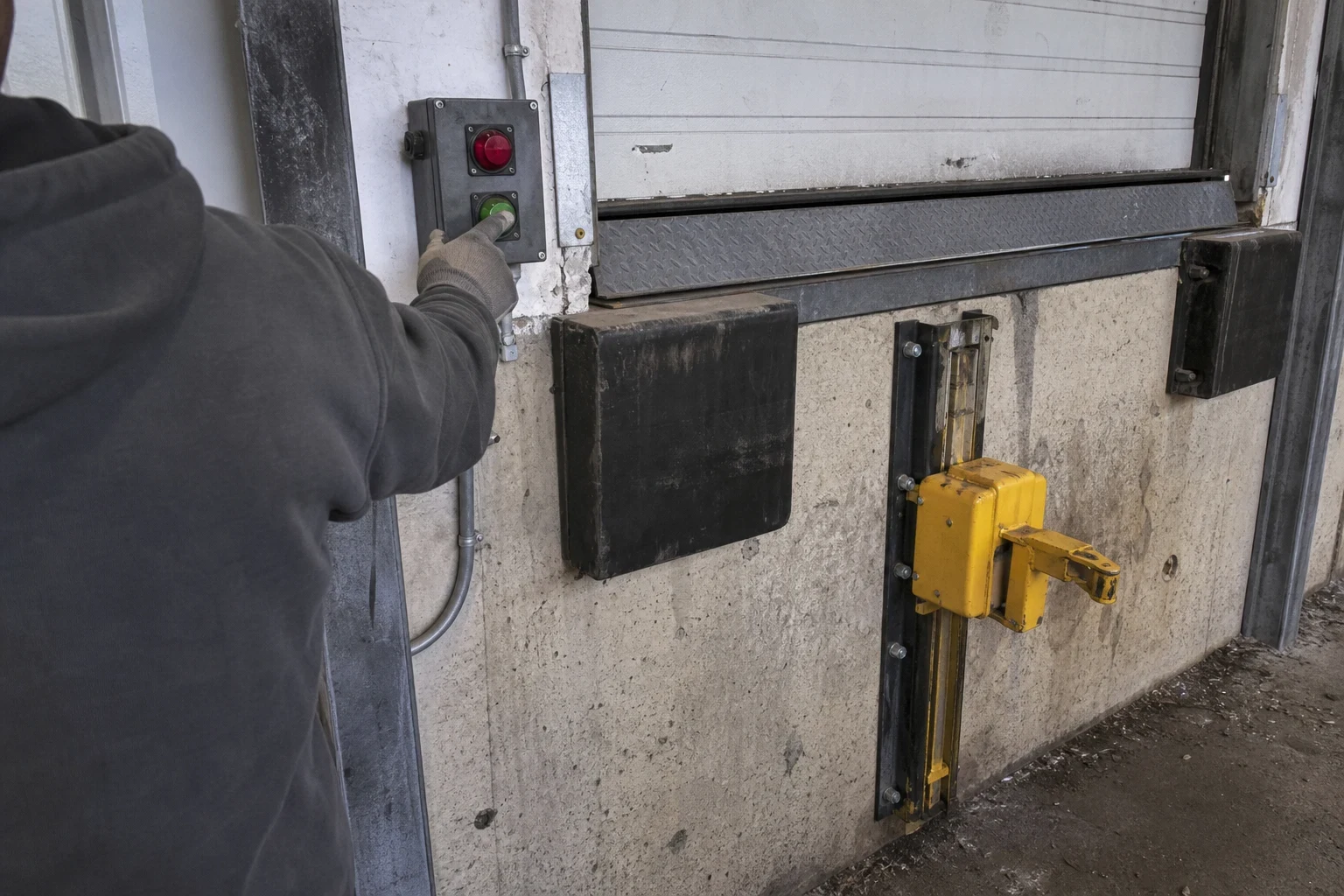
Red and green lights inside and outside the door are how your crew and drivers communicate. We replace bulbs and LED heads, repair wiring and fix the controls that switch them when the restraint engages.
Controls and sensors
We troubleshoot push-button stations, interlocks with your dock leveler or overhead door, and the sensors that confirm a lock. A faulty sensor can show green when nothing is holding the trailer, so we test this carefully.
Replacement when needed
When repair no longer makes sense, we can supply and install a new restraint matched to your trailers and your dock. Our loading dock equipment installation page covers that work in more detail.
Warning Signs at the Dock Door
- Hook comes up empty
- The hook lifts, drops back and catches nothing, or it holds some trailers and slips off others. Tired springs, a worn carriage or a bad sensor are the usual causes. If your crew has quietly gone back to chocking wheels, it's time for us to take a look.
- Lights stuck on one color
- A green light that stays green after the trailer leaves, or a red that never clears, means the system can't be trusted. Drivers and forklift operators rely on those signals.
- Grinding, slow or jerky motion
- Noise or hesitation as the carriage travels usually points to debris in the track, a dry bearing or a motor starting to fail. Caught early, this is often a simple fix.
- Winter sticking
- Snow, ice and road salt pack into the carriage track at the base of the dock wall. If your restraint gets sluggish every winter, cleaning and corrosion work can usually bring it back.
- Visible damage
- Bent hooks, cracked welds or a wall plate pulling away from the concrete come from trailers backing in hard. Damage like this needs a look before the unit is used again.
How a Restraint Repair Visit Works
- 1
You tell us what's happening
On the phone we ask which door, what the restraint is doing and when it started. That helps us bring the right parts and plan around your receiving schedule.
- 2
We inspect and test
We lock out the unit, check the hook or arm, carriage, springs, motor, wiring, sensors and lights, then cycle it with a trailer if one is available. We take photos of anything worn or damaged.
- 3
You get a clear recommendation
We explain what failed and why, and give you a written estimate. If replacement is the better answer, we say so and walk you through the reasons.
- 4
We repair and confirm
Once you approve, we make the repair, cycle the restraint several times and confirm the lights change correctly. Then we clean up and hand the door back to your crew.
What Affects the Cost of Restraint Repair
Most restraint repairs come down to a few parts and a few hours of labor. The price depends on what failed, how easy it is to reach and whether parts are in stock. You see a written, line-item estimate first, and the final bill reflects the work you signed off on.
- Type of restraint
- Hook-style, wheel-based and manual units use different parts. Hydraulic systems take more time to diagnose than simple mechanical ones.
- Age of the unit
- Parts for restraints still in production usually ship without much wait. A unit that's no longer made may need special-order or hard-to-find parts, which adds cost and stretches the schedule.
- Extent of damage
- A bulb or switch is a small repair. A bent carriage, cracked weld or loose wall plate takes more work and sometimes points toward replacement.
- Controls and interlocks
- If the restraint is wired to a dock leveler or overhead door, troubleshooting the full system takes more time than a stand-alone unit.
Vehicle Restraint Questions
- Can my crew keep using wheel chocks until the restraint is fixed?
- Many facilities do, and chocks are better than nothing. They rely on someone placing them correctly every time, though, and they don't give drivers a signal. We'd recommend getting the restraint working again so your crew isn't depending on a workaround.
- Why won't our restraint catch some trailers?
- Trailers vary in the height and condition of their rear impact guards. Some are bent, set too high or missing. If a hook restraint can't catch certain trailers, we check whether it's an adjustment issue or whether a wheel-based restraint would suit your traffic better.
- Can you work on our brand of restraint?
- Most docks run one of a handful of hook or wheel-lock designs, and those are the units we service day to day. With an older restraint, the question is usually whether parts can still be found. We'll let you know after the inspection and lay out your choices, replacement included.
- Can you check our restraints during regular maintenance visits?
- Yes. Restraints are part of our loading dock preventative maintenance service, along with dock levelers and doors. Regular cleaning and adjustment catches worn springs, track buildup and failing lights before they shut a door down.
- How long will the dock door be down?
- When the needed parts are on our truck, we can usually wrap up the repair while we're already there. If a part has to be ordered, we'll give you the expected lead time and talk with you about keeping that door safe until it arrives.
Get Your Restraint Working Again
Tell us which door is giving you trouble and what it's doing. We'll come take a look, explain what we find and fix it when repair is the sensible choice.