ServicesOverhead Doors
Overhead Door Repair in Lehighton
When a dock door sticks halfway, slams down or won't seal, trucks back up and heat walks out. We repair commercial overhead doors at your facility, fix the part that failed, and tell you plainly when a door has reached the point where a new one is the better buy.
Fixing the door you have first
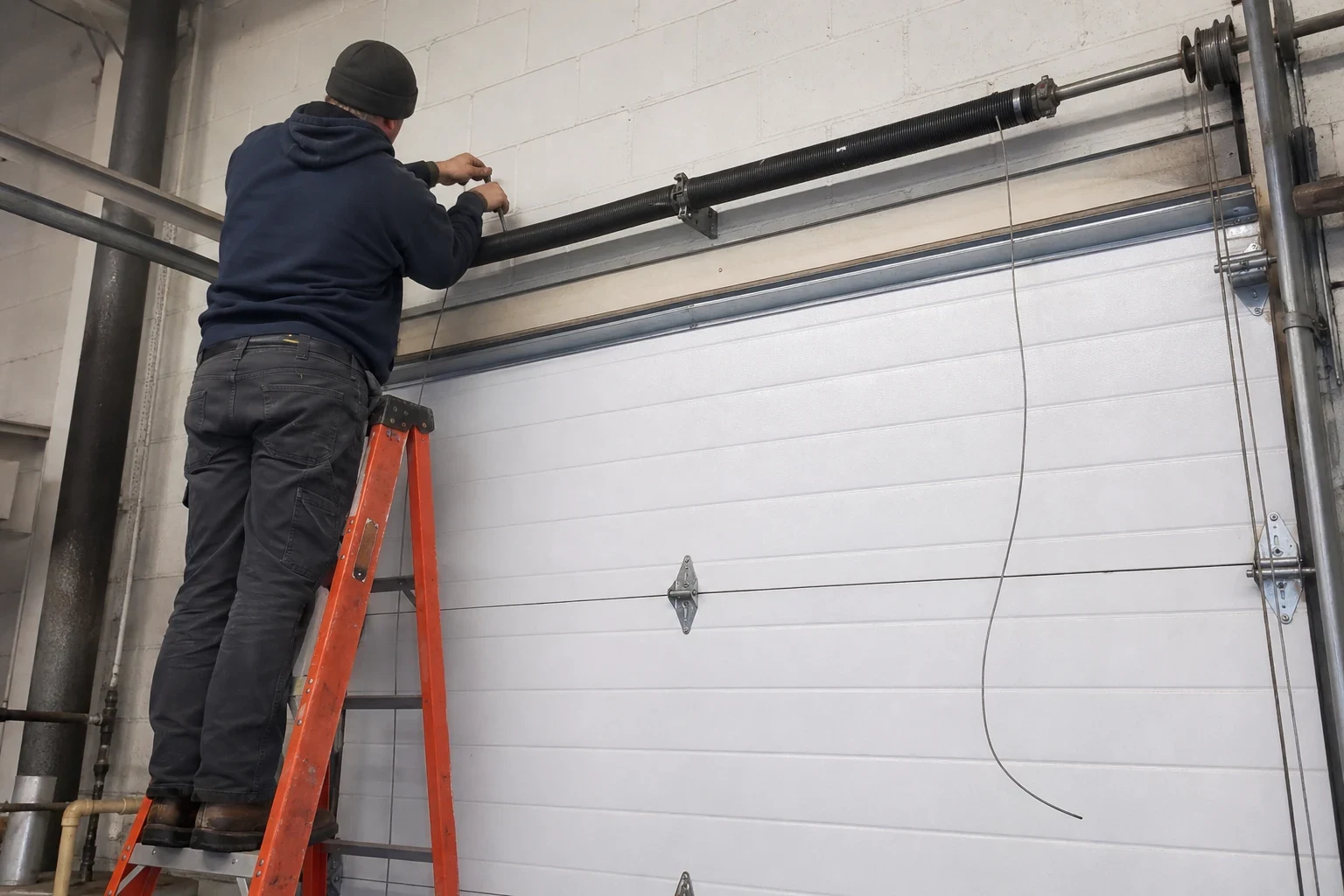
Most overhead door trouble comes down to a handful of parts: a broken torsion spring, a frayed cable, a track knocked out of line by a forklift, worn rollers, or one damaged section. Each of those parts can be changed out on its own. A door with a sound frame and good panels usually has years left in it once the worn parts are swapped out.
Replacement makes sense when several sections are crushed, the door is so old that parts no longer fit, or it simply can't hold up to the traffic your dock sees now. If that's where you are, we'll show you what we found and explain why, so the decision is yours and it's based on the door in front of you.
What our overhead door work covers
Springs and cables
Torsion springs wear out by cycle count, and a busy dock burns through them fast. We swap out broken or tired springs, size them to the door's weight, and change cables and drums when they show fraying or rust. On high-traffic doors we can fit longer-life high-cycle springs.
Tracks, rollers and hinges
Forklift bumps bend vertical tracks and throw a door out of square. We straighten bent track sections or install new ones, re-anchor loose brackets, and swap seized rollers and cracked hinges so the door runs smooth instead of binding.
Damaged sections
A single dented or split panel doesn't mean a new door. Where the section is still made, we order that one panel and install it, and add struts if the door is bowing.
Seals and weatherstripping
Torn bottom seals and worn perimeter strips let in drafts, water and pests. New seals let the door meet the floor and jambs snugly, which keeps cold air and critters on the outside.
Operators and safety devices
We troubleshoot commercial operators, limit settings, photo eyes and reversing edges, and repair whatever has failed. A door that doesn't reverse when something is in its path gets fixed before we leave.
Signs your overhead door needs attention
- It slams or feels heavy
- A door that drops fast or that the operator strains to lift usually has a broken or weak spring. Stop using it until it's checked, because the cables and operator take the strain next.
- Loud grinding or popping
- Dry or worn rollers, a bent track or a bearing on its way out all make noise ahead of failing. Catching them early keeps a small repair small.
- It stops partway or reverses
- Misaligned photo eyes, a bent track or a worn limit setting can all cause this. It's a nuisance at first and a real downtime problem later.
- Daylight under or around the door
- Gaps at the bottom or sides point to tired seals or a door that has racked out of square. Through a cold Lehighton winter, that gap is heating money leaving the building.
- Frayed cables or a crooked door
- If one side hangs lower than the other, a cable has slipped or is wearing through. That door can come off its track, so it needs a look soon.
How a repair visit runs
- 1
You tell us what's happening
On the phone, describe the door, what it's doing and how much it's used. That helps us bring the likely parts so the work can often be finished in one trip.
- 2
We inspect the whole door
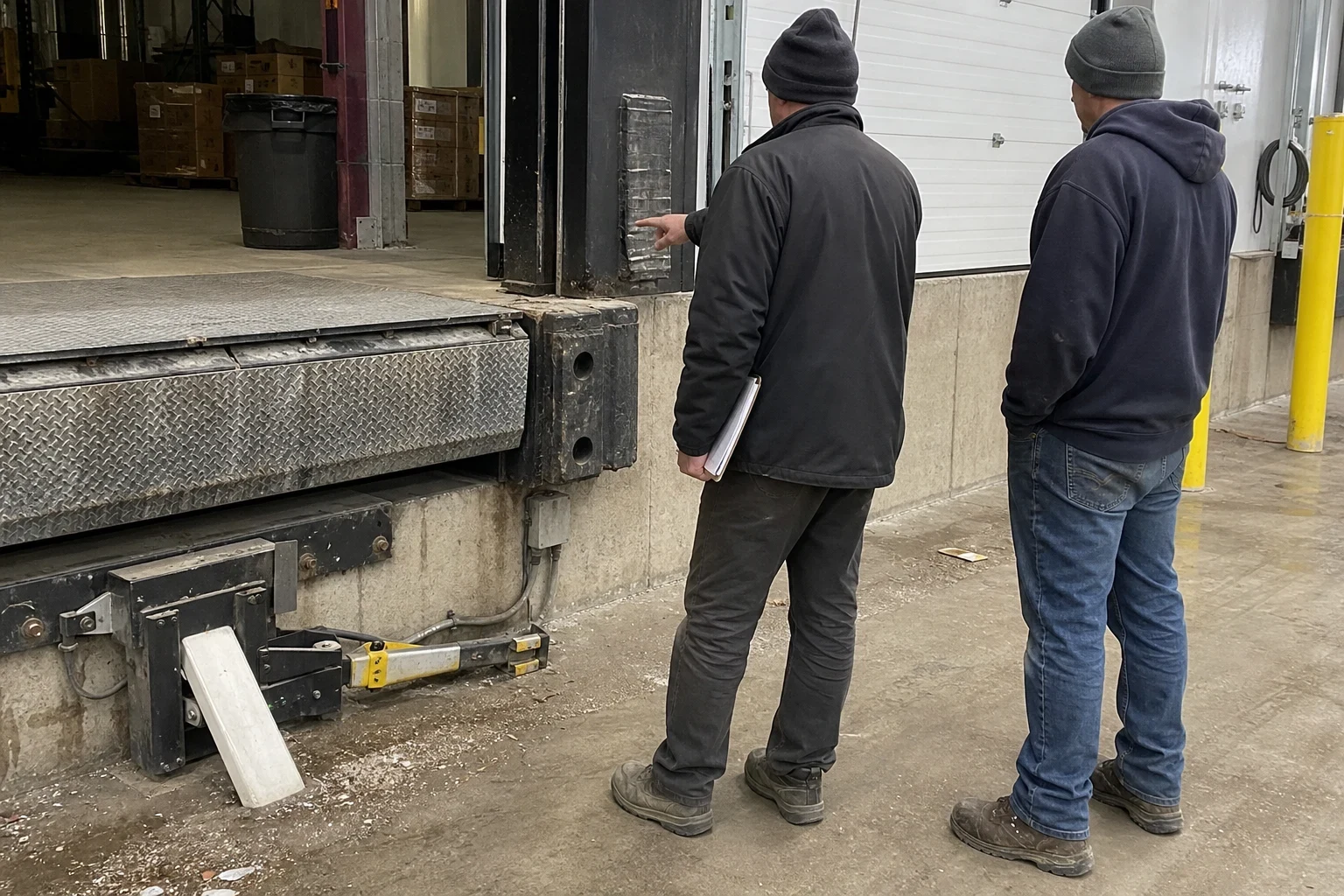
We check springs, cables, drums, tracks, rollers, sections, seals and the operator, not just the part that broke. We take photos of what we find and walk you through them.
- 3
You get a clear repair-or-replace answer
We explain what needs fixing now, what can wait and what it will cost before any work starts. If replacement is the smarter choice, we tell you why.
- 4
We do the work around your schedule
We coordinate with your receiving team so one door is down at a time and trucks can be routed to another bay. When we finish, we cycle the door, test the safety reversing and clean up.
What affects the cost of an overhead door repair
Most repairs come down to which parts failed and how hard the door is to reach. We price each job after we've seen the door, and you get the full figure before we start. Here is what moves it.
- Door size and weight
- Larger, heavier insulated doors need bigger springs and heavier cables, and sometimes a lift and a second technician.
- Which parts have failed
- A single spring is a different job than springs, cables and drums together. Several damaged sections cost more than one.
- Age and parts availability
- Older doors sometimes need parts sourced or adapted. When parts are hard to get, we'll tell you how that changes the repair-versus-replace math.
- Spring cycle rating
- High-cycle springs carry a higher parts price. On a dock door that opens dozens of times a shift, they can outlast standard springs by a wide margin.
- Scheduling around your operations
- Work timed for shift changes or slow periods to limit downtime can affect how the job is planned and priced.
Common overhead door questions
- Should my door be repaired or replaced?
- Start with the door's structure. If the frame is sound, most panels are in fair condition and parts are still available, repairing what broke usually gets you the most for your money. A new door is worth it when several panels are badly damaged, the door can't keep up with your dock traffic, or each repair seems to lead to the next. We'll show you what we found and tell you plainly.
- Can one damaged panel be replaced by itself?
- Usually. When the manufacturer still makes that section, we put a new one in its place and leave the rest of the door as is. If it's discontinued, we'll go over what else you can do.
- How long will the door be down?
- Springs, cables and rollers are normally handled in one visit. Panel work can take a second trip once the section comes in, and the door can often run safely until then. We'll schedule around your receiving hours.
- Do you repair door operators as well?
- We do. We diagnose and fix commercial operators, limit settings, photo eyes and reversing edges, and the last thing we do on every visit is test that the door reverses safely.
- A spring on our door broke. Is it OK to keep using it until you arrive?
- Please don't. Without the spring, the operator and cables are holding weight they weren't designed for, and the door could fall without warning. Keep it shut and send trucks to a different bay until we've checked it.
Get that dock door running right again
Tell us what your door is doing and how often it cycles. We'll come out, find the cause and give you an honest answer on repair versus a new door before any work starts.